SAS Executive Officers & Administration
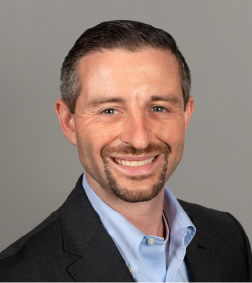
Andrew Michael Zipkin, Senior Scientist, Eurofins EAG Laboratories, 103 Commerce Blvd, Liverpool, NY 13088; Adjunct Professor, School of Human Evolution and Social Change, Arizona State University, 900 S. Cady Mall, Tempe, AZ 85281;
Andrew Zipkin is an analytical chemist and archaeological scientist with ~15 years of experience in elemental characterization, strontium isotope geochemistry, compositional data analysis, provenience studies, geographic information science, and anthropological and environmental archaeology. He has worked as a mass spectrometrist and materials scientist for the commercial testing laboratory and contract research organization Eurofins EAG Laboratories since 2021. Zipkin has also been affiliated with Arizona State University in multiple capacities since 2018 and continues to collaborate with faculty and mentor graduate students there. Previously, he was a National Science Foundation SBE Postdoctoral Fellow at the University of Illinois at Urbana-Champaign (2015-2018) and a Ph.D. student at The George Washington University (2009-2015). He conducted archaeological, ethnographic, and geological field work in Alaska, Kenya, Malawi, Namibia, South Africa, and Zambia between 2007 and 2019. In academic research, Andrew emphasizes developing minimally destructive methods for geochemical provenience studies and other classification-oriented problems in archaeological science, like lithic heat treatment detection. Secondary research areas include radiogenic strontium isoscape construction, detecting chemical diagenesis in faunal hard tissue, and experimental archaeology of hafting adhesives. His main archaeomaterials of interest are ochre, silcrete, and ostrich eggshell. In the commercial chemistry world, he is developing multi-technique elemental characterization approaches for lithium ion battery raw materials (ores), intermediate concentrates, and expended batteries that will faciliate purity analysis and traceability throughout the battery life-cycle. He also serves as the site subject matter expert for LA-ICP-MS and LIBS at the EAG Laboratories Syracuse, New York facility.
Zipkin was the inaugural Vice President for Social Media and Outreach from 2017-2020 and the Vice President for Intersociety Relations from 2020-2023.

Paul Szpak, Professor, Department of Anthropology, Trent University, 2089 East Bank Drive, Peterborough, ON, K9L 1Z8,
Paul Szpak is a Professor and Canada Research Chair in the Department of Anthropology, Trent University, Peterborough, Canada. He earned his BA from McMaster University, where he conducted stable isotope analyses on archaeological fauna from the northeast Pacific and Pleistocene mammoths. His PhD, from Western University, used stable isotope analysis to better understand the impacts of fertilizers in the ancient Andes and to assess animal management practices on the north coast of Peru. Szpak held SSHRC, Killam, and Banting postdoctoral fellowships at the University of British Columbia where he shifted his research to focus on palaeoecology of Arctic marine ecosystems. Since 2016, he has been a faculty member and Canada Research Chair at Trent University. He directs the Trent Environmental Archaeology Lab and conducts research using a range of stable isotope techniques throughout the world, but continuing to focus on the Andes and North American Arctic.
Link to the Trent Environmental Archaeology Laboratory webpage: https://www.paulszpak.com/
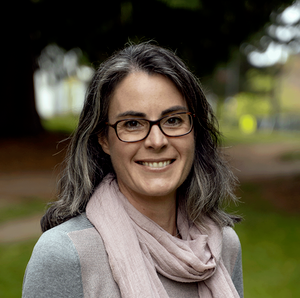
Camilla Speller, Associate Professor, Department of Anthropology, University of British Columbia, 6303 NW Marine Drive, Vancouver, BC, V6T 1Z1,
Camilla Speller is an Associate Professor at the Department of Anthropology, University of British Columbia, Vancouver, Canada. Her BA from the University of Calgary was a double major in archaeology and biological anthropology. During Speller's MA at Simon Fraser University, she developed skills in ancient DNA analysis and expanded this expertise for her PhD research. Her MA, completed in 2005, used ancient DNA analysis to examine the distribution of salmon species at the Northwest Plateau site of Keatley Creek, BC, Canada. Speller's PhD dissertation, also completed at Simon Fraser University in 2009, applied ancient DNA techniques to study the use of wild and domestic turkeys in the Southwest United States. In 2010, she was awarded a SSHRC postdoctoral fellowship to continue her research on North American turkey domestication at the University of Calgary, and helped to develop the new ancient DNA laboratory in the Department of Archaeology. In 2012, Speller joined the BioArCh Centre at the University of York, UK as a Marie Curie postdoctoral research fellow (EU-IIF) where she applied ZooMS and ancient DNA analysis to questions of historic whale exploitation. Speller became a Lecturer in Archaeology at the University of York in 2014 and led the ancient genetics group at BioArCh until 2018, when she joined the Department of Anthropology at UBC

Catherine (Kate) Klesner, Research Associate, McDonald Institute for Archaeological Research, University of Cambridge
Kate Klesner is a postdoctoral researcher in archaeological ceramics at the University of Cambridge. Her research focuses on reconstructing ancient ceramic technologies through archaeometric analysis, exploring how technological knowledge was developed, transmitted, adopted, and adapted in the past. Her doctoral research (Ph.D., Materials Science and Engineering, University of Arizona, 2021) examined early Islamic period lead-glazed ceramics from Silk Road cities in Central Asia, revealing insights into trade networks and technological innovation in the region. She has worked on diverse material assemblages, including ceramics, lithics, and rock art, from regions across the Americas, Asia, and Europe. She has conducted fieldwork throughout Central Asia and Europe, developing her archaeometric expertise through research and training with institutions such as the University of Missouri Research Reactor, the Institute for the study of the Ancient World (NYU), and Demokritos (Greece). Her current work investigates craft organization in pre-Hispanic South America, focusing on resist-painted ceramics from Nariño, Colombia, and integrate compositional analysis, microscopy, and 3D geometric morphometrics to reconstruct the chaîne opératoires of three distinct ceramic traditions.
Destiny Crider, Koren 319, Luther College, 700 College Drive, Decorah, IA 52101, tel: 563-387-2156;
Destiny Crider (Ph.D. Arizona State University, 2011) is Anthropology Collections Manager and Museum Instructor at Luther College, specializing Collections Management and mentoring student research on ethnographic and archaeological collections. She has served as Ceramic Analyst on the Cerro Portezuelo Project (materials curated by the Fowler Museum at UCLA), directed by Dr. George L. Cowgill (ASU) and Dr. Deborah L. Nichols (Dartmouth). She currently serves as ceramic consultant on ceramic analysis of Postclassic ceramics in Central Mexico. Her dissertation research focused upon social and economic interaction in Central Mexico in the Epiclassic and Early Postclassic periods using Instrumental Neutron Activation Analysis (INAA) for identification of pottery production areas in combination with technological and stylistic attribute analysis. In addition, current projects include the implementation of Proton Induced X-ray Emission (PIXE) studies of Central Mexican paints used on decorated pottery and Southwest turquoise sources. Her dissertation research was supported by the Foundation for the Advancement of Mesoamerican Studies, Inc. (FAMSI), National Science Foundation Dissertation Improvement Grant, Sigma-Xi Grants-in-Aid of Research, ASU Graduate and Professional Student Association. Destiny Crider was recently awarded a 2009-2010 ASU Faculty Emeriti Fellowship.
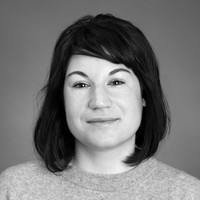
Vana Orfanou, MSCA Postdoctoral Fellow, Ludwig Maximilian University (LMU) Munich, Schellingstrasse 12, 80799 Munich, +49 (0)89-2180-5360;
Vana Orfanou is an archaeological scientist studying metallurgical and other inorganic materials. Vana’s heart truly lies with copper. She completed her PhD on Early Iron Age Greek copper-based technology linked to sanctuary deposits in 2015 at UCL. Since then, she has worked with metallurgical assemblages covering a broad spectrum of periods and cultures in Europe, the eastern Mediterranean and western Asia from the Middle Bronze Age to late medieval times. Some of the things Vana has analysed include Viking Age crucibles, Bronze Age swords, Byzantine rings, Islamic candlesticks, Iron Age brooches, and Roman coins. Currently, Vana is looking at metallurgical technology from the Greek mainland to better understand the impact of profound and irreversible socio-political change at the end of the Bronze Age. What brings all this together is Vana’s enthusiasm for unravelling past people’s worldviews through technological insights.
Through her role as the SAS Vice President for Social Media, Vana aspires to promote the community of archaeological scientists and support early career researchers from all backgrounds.
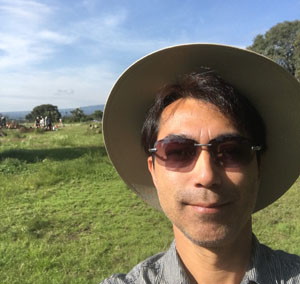
Tatsuya Murakami, Department of Anthropology, Tulane University, 6823 St. Charles Ave., Dinwiddie Hall 101, New Orleans, LA 70118, USA; tel: 504-862-8135; fax: 504-865-5595;
Tatsuya Murakami (Ph.D. Arizona State; MA, University of Tokyo) is an Associate Professor at the Department of Anthropology of Tulane University. His research focuses on the materiality of power relations and identity among different social segments as expressed in human and material resources in Central Mexico. His research is specifically concerned with developing a set of concepts and methodologies to discern the complex social landscapes of power and identity based on practice-based and multidisciplinary approaches, including the application of archaeometric methods (petrography, soil geochemistry, XRD, XRF, etc.). He has conducted construction experiments, materials analysis of lime plaster and cut stone blocks, and an analysis of lapidary objects (especially greenstone) at Teotihuacan. He is currently directing an archaeological project with Shigeru Kabata of the Kyoto University of Foreign
Studies at the Formative site of Tlalancaleca, Puebla, Mexico, which is investigating the genesis, transformation, and decline of early urbanism and broader macro-regional processes leading to state formation at Teotihuacan.

Braden Cordivari, PhD Candidate, Institute for the Study of the Ancient World, New York University, 15 East 84 th Street, New York, NY 10028.
Braden Cordivari's current research examines the technological innovation of brass alloying in central Anatolia in the early 1st millennium BCE through the analysis of metal objects, including pXRF and lead isotope analysis. His broader interests include craft production, archaeometallurgy, and pyrotechnology, as well as relationships between political networks and craft practices. He has published in Journal of Archaeological Sciences: Reports, Archaeological and Anthropological Sciences, and Ancient Near Eastern Studies and conducted research in Türkiye, Greece, and Italy.

Ester Oras, Associate Professor, Department of Archaeology, Institute of Chemistry, University of Tartu, Ülikooli 18, 50090, Tartu, Estonia;
Ester Oras is an associate professor in analytical chemistry and archaeology, and the director of Archemy lab at the University of Tartu, Estonia. She obtained her PhD degree in archaeology from the University of Cambridge in 2014, and has dedicated her career to bridging the humanities and natural sciences ever since. She is the first specialised archaeochemist in the eastern Baltics, who introduced the field of organic residue analysis to the region. Her main field of research is the use of biomolecular archaeology (lipids, proteins, isotopes) to study ancient diet, diseases and migrations, with a specialisation in pre- and protohistory of the Baltic Sea region. Visit her lab page at Archemy.ee
Representative on the Editorial Board of the Journal of Archaeological Science
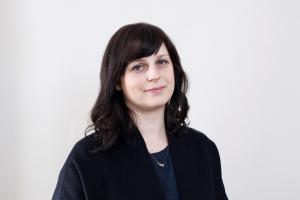
Brandi MacDonald, Assistant Research Professor in the Archaeometry Laboratory at MURR., 1513 Research Park Drive, MURR, University of Missouri,
Dr. MacDonald is a specialist in archaeological science, with interests in multi-method analytical approaches to pigments, rock art, ceramics, obsidian, and glass. She presently studies rock art and mineral pigment use in the Pacific Northwest and in the lower Canadian Shield, as well as obsidian resource use in Northwestern Patagonia. Dr. MacDonald also coordinates the MURR Archaeometry Laboratory Pre-Doctoral Internship Program.
Editor for Archaeometry
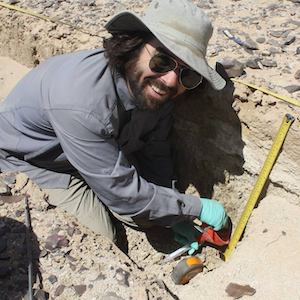
AJ White, Assistant Professor of Anthropology, Indiana University Indianapolis;
AJ White was awarded his PhD in Anthropology by the University of California, Berkeley. He has conducted geoarchaeological research in Jordan, Egypt, Vietnam, and the United States. He is primarily interested in using geochemistry to link archaeological and paleoenvironmental data sets to better understand human/climate relationships in the past, including at Cahokia, Illinois during the Mississippian Period (c. 1000-1400 CE) and Kharaneh IV, Jordan during the early Epipaleolithic (c. 20,000-18,000 BP). Prior to becoming the SAS Webmaster, AJ was a Student Ambassador. He also served as the co-chair of the Art & Archaeology Section at the SAS partner conference SciX in 2023.
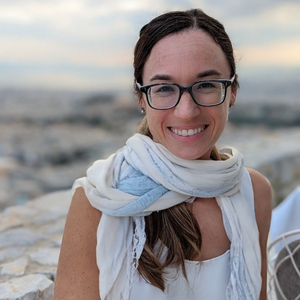
Rachel Kulick, Research Affiliate, Aegean Material Culture Laboratory, University of Toronto; Curriculum Support Officer, Department of Historical Studies, University of Toronto Mississauga, Maanjiwe nendamowinan, 4th Floor, 3359 Mississauga Road, Mississauga, Ontario L5L 1C6, Canada:
Rachel Kulick is an archaeologist, specializing in geoarchaeology, with a geographic focus in the Mediterranean region. Kulick's research focuses on human-environment interactions, sustainability, and resilience. Using geoarchaeology, she explores interdisciplinary connections between material culture, human activities, and past and present environments, analyzing archaeological and environmental data along with micro-contextual samples. This approach enables high-precision dating and microecological reconstructions to understand the social dynamics and environmental features of settlements. As a Research Affiliate with the Aegean Material Culture Laboratory, Kulick presently works with the Palace and Landscape at Palaikastro (PALAP) Project on Crete, and independently with the Kalavasos and Maroni Built-Environments (KAMBE) Project on Cyprus and the Pālehua Archaeology Project on Oahu, Hawaii. Kulick additionally volunteers with archaeological and museum entities, contributing to professional, public, and educational initiatives, notably serving as the Ontario Provincial Coordinator for the Society for American Archaeology's Public Education Committee since 2017. Kulick is formally trained in Art History and Aegean Archaeology (Ph.D., University of Toronto, 2017), Archaeological Sciences, specifically stable isotope analysis (MPhil, University of Cambridge, 2011), and Archaeology, including dendrochronology (BA, Cornell University, 2009). She has built her geoarchaeological expertise through study, research, and projects with various institutions, including the University of Tübingen, the British School at Athens, and the American School of Classical Studies at Athens. Kulick has previously worked on archaeological projects in France, Italy, Ireland, and the United States (New York).